
How to Spot (and Fix) the Packaging Mistakes You’ve Stopped Seeing
You want to get your products into more boutiques, shops, and stores. You know your product is good enough to be there. But there may be something quietly getting in the way of that next stage of growth:
You might have packaging blindness.
Packaging blindness occurs when you’ve looked at your packaging for so long that you can no longer see it through a new customer’s eyes. This phenomenon is surprisingly common among product business owners.
Consider how frequently you engage with your packaging. You review proofs, labels, website images, inventory, social media posts, shipping boxes, and product photos repeatedly. Over time, your brain may stop processing the details and instead focus on what you already know.
You know what your product is. You know why it’s special. You know who it’s for, how it works, what your brand stands for, and why it costs what it costs. So when you look at your packaging, you see all that information, even when the packaging itself doesn’t communicate it effectively.
But a first-time shopper—or a retail buyer seeing your product for the first time—lacks this background knowledge. That gap between what you see and what they see can make it harder to get stocked in the stores you want, attract new customers, and communicate your product's true value.
The good news is that you can learn to spot the signs of packaging blindness and start seeing your packaging with fresh eyes. Here’s what you need to know.
Why Packaging Blindness Can Hold Your Business Back
As a packaging designer, I often notice a disconnect right away. A founder might describe their product as premium, high-quality, thoughtful, innovative, or gift-worthy. But when I look at the packaging, those qualities aren't evident.
This disconnect also shows up in messaging and visual hierarchy. Since the founder knows the product inside and out, everything on the package makes sense to them. But as an outsider, I can see when the information is not immediately clear—what the product is, what makes it different, and why someone should choose it.
And when I compare that packaging to the brands it will compete against on retail shelves, I frequently see another gap: the difference between where the business wants to go and what the packaging conveys right now.
This gap can show up in several important ways.
Your packaging may be making it harder to get into the stores you want.
Your product may be ready for wholesale, but your packaging might still reflect an earlier stage of your business.
You might have started with packaging that you could afford at the time, created it yourself while testing ideas, or found that it worked well when selling primarily to customers directly. However, now you are approaching boutiques, shops, and retail stores.
Retail buyers need to quickly recognize that your product looks credible, appealing, and appropriate for their shelves.
Packaging blindness can make it difficult to recognize when your product has reached that level—but your packaging hasn’t caught up yet.
Your packaging may be making shoppers work too hard.
You know why your product is special, but the shopper standing in front of the shelf may not. If your packaging doesn't clearly communicate those reasons, shoppers may struggle to understand what the product is, what makes it unique, or why it’s worth the price.
This confusion creates friction at the exact moment you want to make the choice easy. Instead of quickly thinking, "This is for me," they are left trying to figure it out on their own. In a retail environment, you typically won’t be there to explain everything they might be missing.
Your packaging needs to do that work for you.
Your packaging may not reflect the level your business has actually reached.
Your product has improved, and your business has grown. While your prices may have increased and your customer base may have changed, your retail goals may have expanded too. However, if your packaging still feels unfinished, new, or DIY, shoppers and retail buyers might not perceive your brand at the elevated level you know it has reached.
This disconnect can affect how customers view your brand's quality and trustworthiness. More importantly, it can keep your packaging from effectively supporting your business's growth.
So, how can you determine what your packaging is truly communicating? Stop evaluating it through the lens of your existing knowledge, and start seeing it as someone encountering your product for the very first time.
4 Ways to See Your Packaging With Fresh Eyes
1. Look at your packaging without filling in the blanks
Try to forget everything you know about your product for a moment. Look at the front of your package and ask yourself the following questions:
Can I quickly identify what this product is?
Who is this product for?
What makes this product different from others?
Why should someone choose this product?
Answer these questions based solely on what's communicated on the package. Don't fill in missing information with what you already know. This is one of the biggest challenges I see with packaging blindness; founders have so much context about their products that their brains automatically fill in the gaps.
A new shopper won’t have that context. Your packaging needs to communicate the most important information without requiring the shopper to understand your brand first.
2. Put your packaging in its future retail environment
Don’t evaluate your packaging in isolation. Instead, look at the products already sold in the boutiques, shops, and stores where you want to place your product. Imagine your product sitting right there beside them on the shelf:
Does your packaging feel like it belongs?
Does the package design quality match the environment?
Do the package materials match your product’s quality and price point?
Does your packaging attract attention while still feeling at home alongside the other brands the store carries?
This doesn’t mean copying your competitors or making your packaging look exactly like everything else on the shelf. It means assessing your packaging in the context where it will actually be experienced.
When I work with packaging clients, this future retail environment matters because we’re not simply designing something that looks nice on its own. We’re creating packaging that needs to communicate the right message when it’s surrounded by other products competing for the same shopper’s attention.
3. Get feedback from someone who doesn’t know your product
One of the best ways to uncover packaging blindness is to borrow someone else’s eyes. Just remember, the questions you ask matter.
Instead of showing someone your package and asking, “Do you like it?” ask questions that reveal what the packaging is communicating.
What do you think this product is?
What stands out to you the most?
Who do you think the target customer is?
What do you think this product costs? What makes you think that?
Why might you buy this product?
Your goal is not to gather opinions on design preferences, but to collect meaningful insights. If someone completely unfamiliar with your brand interprets the package differently than you intended, that can point you toward a communication gap you’ve stopped noticing.
4. Evaluate your packaging based on where your business is going, not where it started
Here’s a question I want more product business owners to ask themselves: If I were launching this product today, knowing what I know now about my customer, my product, and my retail goals, would I make these same packaging decisions?
Your answer reveals a lot.
Packaging design choices that made perfect sense two or three years ago may no longer align with the business you have today. This doesn’t mean the original packaging was bad. It may simply mean you’ve outgrown it, trends have changed, competition has advanced, or all three.
Your packaging may need to evolve to support where the business is going next.
What Packaging Blindness Looks Like in the Real World
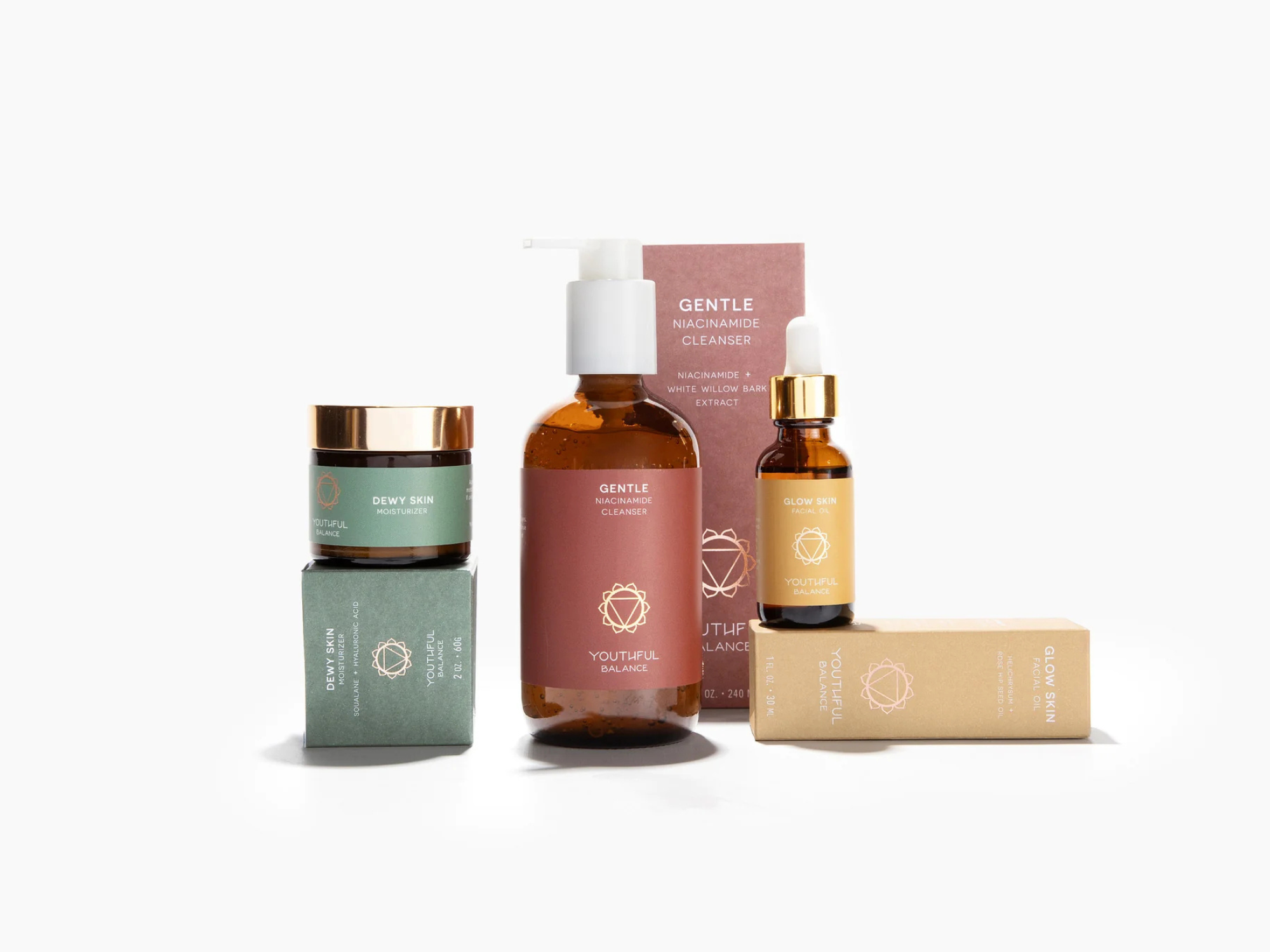
Beth, the founder of Youthful Balance, experienced this firsthand. Before we worked together, she described her packaging as basic kraft boxes with labels, and she felt her primary product labels were boring. However, she hadn’t fully recognized the problem herself. In her words, “I was package blind and didn’t realize it.”
More importantly, she began to see positive business outcomes. Beth reported increased sales and more interest from retailers after launching her new packaging. Additionally, a marketing agency reached out because they wanted to feature her products in a collaboration with celebrity Brooke Burke.
Her product didn’t suddenly change; what changed was how she presented it to the world. This illustrates the opportunity you may be missing when you become too familiar with your current packaging to see how a new customer perceives it.
This Is Exactly What We Address in Packaging Pronto
It can be difficult to diagnose packaging blindness on your own because the whole problem is that you’re too close to the packaging. That’s where an outside perspective can be incredibly valuable.
Inside Packaging Pronto, we start by looking at your packaging with fresh eyes.
First, we focus on strategy. I take the time to understand your product, your target customer, your price point, your competition, and your business goals. This exploration helps us identify gaps between how you describe your product and what your current packaging actually communicates.
Next, we determine what your packaging needs to communicate more effectively and quickly. I analyze hierarchy, messaging, shelf impact, differentiation, and perceived value to ascertain what a first-time shopper should see and understand within those crucial first few seconds.
From there, I redesign the packaging to align with where your business is headed.
The goal is to create packaging that reflects your product's quality, attracts attention, and helps shoppers understand why your product is the right choice—especially as you expand into boutiques, shops, and stores.
Instead of wondering whether your packaging is helping or hurting your brand, you will walk away with strategically designed packaging that aligns with your established business and your future goals.
“But If Customers Already Like My Product, Does the Packaging Really Matter That Much?”
Yes, it does—because your existing customers and potential customers make different decisions.
Your current customers already know they like your product. In contrast, your packaging serves a different purpose: it helps convince people who haven’t tried your product yet to give it a chance.
This becomes especially important when you start selling wholesale. A shopper browsing through a boutique doesn’t know how good your product is. They can’t experience its quality, taste, performance, or effectiveness until after they purchase it.
Before making a purchase, your packaging is one of the few pieces of information they can rely on. It helps them understand what the product is, why it’s different, whether it feels trustworthy, and if it seems worth the price.
While product quality is essential, your packaging must first entice customers to pick the product up and take it home.
Your Business May Have Outgrown Its Packaging
It’s easy to develop packaging blindness, especially because you are so familiar with your product.
You know the story behind it.
You understand the quality.
You appreciate the thought that went into every detail.
You recognize why customers love it.
The challenge is making sure someone who knows none of those things can look at your packaging and begin to understand the value too.
Take a moment to reassess your packaging without filling in any gaps. Compare it to the environment where you want to sell it. Ask people unfamiliar with your brand what they actually see. Evaluate your packaging in light of where your business is headed next—not where it began.
When your packaging evolves to match your business, you can create a stronger first impression with retail buyers and shoppers. Customers can understand your product and its value more quickly. You can also approach wholesale growth with packaging that feels aligned with the quality of what you’ve built.
Ready for Packaging That Reflects Where Your Business Is Going?
If you feel that you've become a bit "package blind," or if you're aware that your current packaging doesn’t accurately represent the level your business has reached, Packaging Pronto is designed to help.
We’ll take a strategic look at what your packaging communicates now, identify what needs to change, and create packaging that better communicates your product’s quality, value, and retail potential.
Learn more about Packaging Pronto, and when you’re ready, schedule a call to get started.