
Want to Get Your Product Into Target, Ulta, or Dick’s? Start With Your Packaging
Imagine this: you walk into a Target, Dick’s Sporting Goods, Ulta, Sephora, Home Depot, Lowe’s, Walmart, or another retailer you've always dreamed about, and there it is—your product on the shelf.
For many entrepreneurs in the product business, getting picked up by a major retailer is an exciting milestone that makes all the hard work of building a brand feel tangible and real.
There are compelling reasons to pursue this goal. A major retail placement can introduce your products to thousands, or even millions, of new customers. It can boost sales, enhance brand recognition and credibility, and pave the way for larger purchase orders, more stock-keeping units (SKUs), retailer exclusives, and interest from other retailers.
However, before you start pitching buyers, there’s an important question to ask:
Does your packaging look ready for store shelves?
Packaging should not be an afterthought that comes into play only after a retailer agrees to carry your product. It plays a vital role in presenting your product as prepared for this significant opportunity from the start.
Here are three essential packaging strategies to consider if your goal is to get your product into a major retailer.
Strategy #1: Design for the Retailer You Want Before You Pitch Them
If you have a dream retailer in mind, don’t wait until they’re interested in your product to start thinking about how your packaging would work in their stores. Start studying their shelves now.
Visit the retailer in person when you can and spend time in the category where your product belongs. If you’re targeting multiple retailers, compare what you observe across them.
Pay attention to aspects like price points, package formats, sizes, visual cues, product claims, materials, and assortments. Consider what seems common in the category. What do the more established brands have in common? How much information is communicated on the front of the package? What do shoppers need to understand quickly? How are different products or varieties organized within a brand?
Your goal is not to copy ideas but to understand the visual environment your product will compete in. Your packaging needs to feel appropriate for the category and the retailer while also giving shoppers a compelling reason to notice your product.
Finding this balance is important because a retail buyer shouldn’t have to make a huge mental leap to envision your product on their shelves. Ideally, your packaging should help them see how the product could fit into their assortment.
Collaborating with an experienced packaging designer can make a significant difference in this process. Instead of designing your packaging in isolation, we can analyze your goals, the competitive landscape, target retailers, product line, and positioning together. This approach allows us to make design decisions based on where you want the brand to go—not just where it is today.
The ultimate aim is to create packaging that communicates, “We’re ready for this shelf.”
Strategy #2: Create Shelf Differentiation, Not Just a Beautiful Brand
Beautiful packaging is great. But when you're preparing for larger retail, “pretty” isn't enough. Your product will be surrounded by competitors who are also vying for a shopper's attention. Therefore, your packaging needs to do more than look polished when viewed on a screen; it must also stand out on the shelf.
This is whycompetitive research is especially important. Examine other products in your category and identify the visual conventions that shoppers have come to expect. Consider aspects like package structure, color palettes, photography styles, hierarchy, and the way key benefits are communicated. These conventions can be helpful because they allow shoppers to quickly understand what your product is and where it fits.
However, if your packaging adheres too closely to every convention, it risks blending into the category. This is where strategic differentiation becomes essential. The key question is not just, “How can we make this look different?” but rather, “Which conventions should we follow to help shoppers understand the product, and which ones can we intentionally deviate from to ensure they notice and remember our brand?”
This distinction is important. Being different for the sake of being different can result in packaging that is eye-catching but confusing. Strategic differentiation allows you to stand out while still communicating your message clearly.
As your packaging designer, I will help you view the competitive landscape through a strategic lens. We can pinpoint where your brand should fit in, where there is opportunity to stand apart, and how elements such as color, typography, imagery, hierarchy, package structure, and messaging can work together to create a recognizable presence for your product.
The goal isn't merely to make someone say, “That's a nice package.” The true aim is to make it easier for the right shopper to notice, understand, remember, and choose your product.
Strategy #3: Think Beyond the Individual Package to Your Overall Shelf Presence
When you're building your business one product at a time, it's natural to evaluate each package individually. However, retailers often think about your products collectively rather than individually. They consider how four, six, eight, or even more of your products look side by side on the shelf.
So you need to think about the bigger picture, too. Ask yourself the following questions:
Does your product line create a strong brand block when multiple packages are displayed together?
Can shoppers easily differentiate between varieties, flavors, scents, sizes, or product types?
Is your logo recognizable from several feet away?
Does the assortment feel cohesive, even if each product doesn't look identical?
When several SKUs are displayed together, does your brand appear more substantial, or does it create a sense of inconsistency?
These considerations become increasingly important as your product line expands. A well-designed packaging system should not only address the current product you're offering but also provide a framework to facilitate the introduction of additional products, varieties, sizes, and retail opportunities.
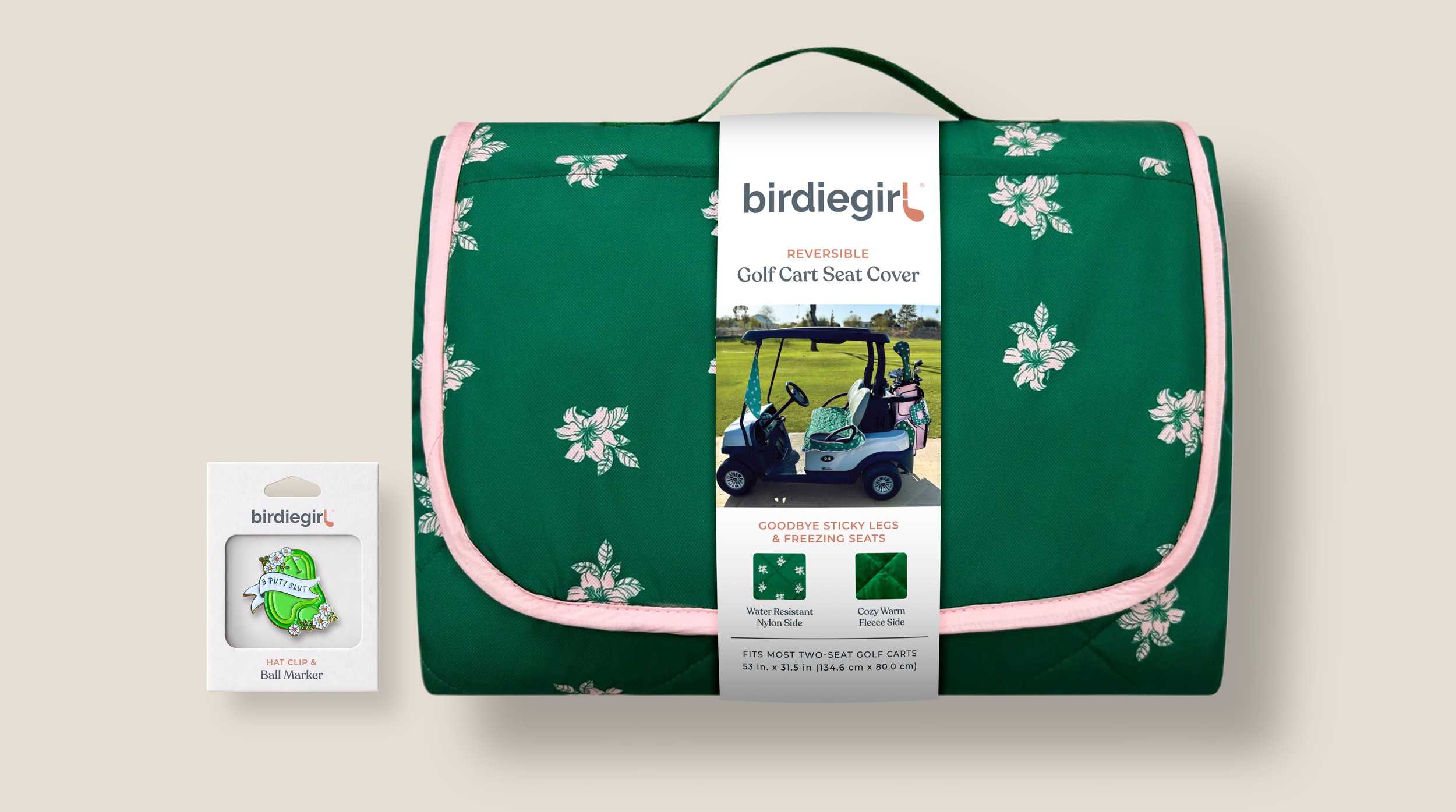
From Independent Brand to 25 SKUs at Dick’s Sporting Goods
Birdie Girl Golf exemplifies significant growth in the retail space. The brand progressed from selling independently to being featured at Dick’s Sporting Goods, showcasing 25 SKUs with the retailer.
Consider the difference between creating a single attractive package and developing a cohesive visual system that supports 25 SKUs in a major retail setting. This type of opportunity goes beyond simply getting products on a larger shelf; it introduces your brand to an entirely new audience and lays the groundwork for ongoing retail expansion.
When I collaborate with product brands on packaging, we focus on more than just the appearance of the package. We also consider how it can evolve into a packaging system that aligns with the brand's future goals. This involves thinking about product hierarchy, SKU differentiation, brand consistency, shelf presence, and how the system can expand as new products are introduced.
It is essential for your packaging to be adaptable to growth, rather than something that requires a complete overhaul each time a new opportunity arises.
“Should I Wait Until a Retailer is Interested Before Investing In Better Packaging?”
This is a question I often hear from product business owners, and my answer is no.
Your packaging is crucial for positioning your brand to seize that opportunity when it arises. A retail buyer might discover your product through a sample, line sheet, trade show, wholesale marketplace, your website, or a direct pitch. If your packaging still appears to be designed for the earliest stages of your business, you are asking that buyer to envision what your brand could look like in a retail setting.
Strong packaging allows you to present a brand that is much closer to being retail-ready now.
There’s also a practical aspect to consider. Retail packaging is not something you want to scramble to develop once an opportunity arrives in your inbox. Larger retail prospects can introduce new factors, such as merchandising needs, package size, labeling, UPC codes, case packs, production quantities, and how your product will stand out among competitors.
By considering these details early on, you can place yourself in a much stronger position when a retailer shows interest. You don't need to know exactly when your first major retail opportunity will occur, but if it's part of your growth strategy, you can start building a brand that is prepared for it.
Your packaging can show retailers you're ready for the next stage
Getting your product into a major retailer can significantly change the potential of your business. It allows you to reach a much larger audience than you would through your own website or a few smaller wholesale accounts. This opportunity helps build recognition and credibility for your brand. Additionally, one successful placement can lead to more SKUs, availability in more stores, larger orders, exclusive deals, and conversations with other major retailers.
There’s a special thrill in walking into a store you’ve frequented for years and seeing a product you created on its shelf.
If this is the direction you want for your business, start considering your packaging with that goal in mind. Design for the retailer you aspire to partner with. Create packaging that stands out on the shelf, and develop a cohesive packaging system that maintains a strong identity across your entire product line.
You don’t have to wait for a retail opportunity to present itself; you can start preparing now.
Ready to Get Your Packaging Retail-Ready?
If bigger retail opportunities are part of your vision for your product business, your packaging should be ready to grow with you.
Packaging Pronto is designed to help product brands create strategic, professional packaging that stands out on the shelf, works across a growing product line, and supports where the business is headed next.
Learn more about Packaging Pronto, and when you’re ready, schedule a call to get started.