

When Should You Actually Start Packaging Design?
If you have a product-based business, there’s a good chance you’ve asked yourself this question at some point:
“When should I start designing my packaging if I want my products ready by a specific date?”
And honestly? It’s one of the most important questions product business owners can ask. On the surface, packaging can seem like the very last step. You finish your product formula, finalize your scent lineup, source your jars or boxes, and then you think about the packaging. But behind the scenes, packaging is rarely a quick final task.
It has to be designed, proofed, sampled, printed, shipped, and often delivered directly to your factory before production can even begin. And for seasonal launches or wholesale opportunities, the timeline starts much earlier than most brands realize.
What many product business owners don’t realize is that retailers start planning seasonal inventory months before customers ever start shopping. Timing insights throughout this guide are informed by retailer search activity trends reported in the Faire 2026 Wholesale Buying Calendar, which tracks when independent retailers are actively sourcing products for major seasonal moments.
It's no surprise that many founders feel caught off guard by this, especially if they are managing a growing business in skincare, candles, beauty, gourmet gifts, jewelry, or DIY craft kits, while also juggling pop-ups, markets, and daily operations.
In this post, I’ll walk you through the real packaging timeline, explain why planning ahead matters so much, and give you a practical seasonal packaging calendar you can actually use in your business.
Let’s get into it.
The Big Picture: How Far Ahead Should You Plan Packaging?
Before we even talk about holidays or retail seasons, let’s start with the reality that most product brands don’t hear early enough.
Here’s our recommended timeline for custom packaging design:
Concept and design: 4 to 8 weeks
Production and printing: 6 to 12 weeks
Wholesale buying windows: Often start months before the retail season itself
What that actually means is that you often need to start packaging work 5 to 8 months before the retail season. Yes, really. And if you’re manufacturing overseas, dealing with multiple vendors, creating specialty finishes, or producing gift sets, that timeline can stretch even longer.
Brands that appear to be “ahead of the game” usually aren’t working faster than everyone else. They’re simply planning earlier. This is especially important if you want to grow beyond makers markets and local pop-ups into wholesale accounts, boutiques, or larger retailers.
Consumers shop in season.
Retailers buy one season ahead.
Smart brands design two seasons ahead.
This shift in timing can truly change the game!
Seasonal Packaging Planning Calendar
The timing recommendations below are based not only on packaging production timelines, but also on retailer buying behavior reported in the Faire 2026 Wholesale Buying Calendar. The data reflects aggregated retailer search activity, showing when independent retailers begin actively planning and sourcing seasonal inventory.
Here’s a practical breakdown of when you should realistically begin packaging design for major retail seasons and holidays.
January Reset (January)
Retail Buying Window: October through December
Your Packaging Design Window: August through September
What’s happening behind the scenes: January Reset has become a major retail moment tied to wellness goals, organization, routines, self-care, and fresh starts. Retailers begin planning these assortments during the fall buying season, well before the holidays even begin.
Shoppers may think of January as the start of the season, but retailers source these products throughout the fourth quarter.
Your Action Plan
Start packaging design for the New Year in August or September, finalize designs in early fall, and move into production before holiday manufacturing bottlenecks begin. This timing is especially important because printers and vendors become overloaded as holiday packaging production ramps up in Q4.
Best Categories
Wellness products
Home goods
Beauty and self-care
Organization products
Valentine’s Day (February)
Retail Buying Window: November through January
Your Packaging Design Window: September through October
What’s Happening Behind the Scenes: Retailers begin to anticipate demand for Valentine’s Day products in October. This demand builds significantly from November to January, peaking in January. That means boutique buyers are often shopping long before consumers are.
Your Action Plan
Start Valentine’s packaging design in September, finalize it by mid-October, and send it to production no later than early November. That gives you enough time to be wholesale-ready before the January spike.
Best Categories for Valentine’s
Jewelry
Beauty and self-care
Candles
Gourmet gifts
Easter and Spring (March to April)
Retail Buying Window: December through March
Your Packaging Design Window: October through November
Spring products need to be sourced much earlier than most brands expect. Retailers are planning spring assortments during the holiday season, if not earlier.
Your Action Plan
Start designing spring packaging in October, finalize it by late November, and move into production in December. This timing helps you hit the early-year buying window when retailers are actively planning their spring inventory.
Best Categories for Spring
Bath and body
Kids products
Chocolates
Mother’s Day (May)
Retail Buying Window: January through April
Your Packaging Design Window: November through December
Mother’s Day has one of the longest planning curves in retail. Demand starts building right after the new year and steadily grows through spring.
Your Action Plan
Start Mother’s Day packaging in November, finalize by mid-December, and begin production in early January.
Here’s the honest truth: If you’re starting Mother’s Day packaging in March, you’re already behind for wholesale. That surprises a lot of product business owners.
Best Categories
Jewelry
Beauty and self-care
Candles
Gourmet gifts
Bath and body
Personalized gifts
Father’s Day (June)
Retail Buying Window: February through April
Your Packaging Design Window: December through January
Father’s Day often follows similar retail planning patterns as Mother’s Day, especially for gift-focused brands.
Your Action Plan
Begin Father’s Day packaging in December, finalize by late January, and have inventory ready to pitch by February.
Best Categories
Grill and food products
Men’s grooming
Hobby and gift items
Summer (May to August)
Retail Buying Window: January through May
Your Packaging Design Window: November through January
Summer products start appearing in retailer planning surprisingly early. By the time consumers are shopping for summer, retailers have often already finalized many purchasing decisions.
Your Action Plan
Start summer packaging planning in November, finalize core packaging by January, and move into production in February.
Best Categories
Beach and travel items
Patio & garden
Outdoor lifestyle goods
Back-to-School (July to September)
Retail Buying Window: March through May
Your Packaging Design Window: January through March
Back-to-school is one of the largest annual retail resets across many categories.
Your Action Plan
Begin back-to-school packaging in January, finalize by March, and complete production by April. This gives you enough runway for wholesale outreach and retailer ordering.
Best Categories
Stationery
Lunch and food products
Kids products
Organization products
Fall and Halloween (October)
Retail Buying Window: May through September
Your Packaging Design Window: March through April
This is one of the biggest timeline surprises for many brands. Retailers start browsing Halloween products much earlier than most founders expect.
Your Action Plan
Start Halloween packaging in March, finalize by late April, and move into production by May. By late summer, competition becomes much heavier and buyers are already narrowing down their selections.
Best Categories
Candles
Candies
Bath and body
Novelty gifts
Holiday and Christmas (November to December)
Retail Buying Window: May through November
Your Packaging Design Window: February through May
Holiday is by far the biggest buying season for many product businesses, yet time when packaging preparations are often overlooked. Many brands start thinking seriously about holiday packaging sometime in July or August thinking they have plenty of time, but by then, retailers have already begun their shopping months earlier.
Your Action Plan
Start holiday packaging strategy in February, finalize designs by late April or early May, and begin production no later than May or June.
This timeline gives you the best chance of:
Landing wholesale orders
Avoiding printer bottlenecks
Managing inventory more calmly
Launching without last-minute panic
Best Categories
Gift sets and bundles
Limited editions
Advent calendars
Giftable packaging upgrades
Why Do I Have to Start So Far Ahead?
This is usually the next question people ask. The short answer is:
Because packaging timelines involve multiple moving parts, not just the design itself.
Here’s what typically happens behind the scenes:
Finalizing dielines and packaging specs
Gathering ingredient lists or legal copy
Ordering physical samples
Adjusting colors after print proofs
Waiting for printers or specialty finishes
Shipping packaging materials to your manufacturer
Coordinating production schedules
Preparing photography and wholesale assets
Even one delay can push your timeline back by weeks. And during busy seasons, printers and packaging vendors book up quickly, especially in Q2 and Q3.
That’s why experienced product brands treat packaging like part of their business planning calendar, not a last-minute creative task.
The earlier you plan, the more options you usually have:
Better production windows
Less rush pricing
More flexibility with custom finishes
More time for testing and revisions
Less stress overall
Common Packaging Planning Mistakes I See
After more than 20 years designing packaging for brands sold at retailers like Dick's Sporting Goods and Kohl's, I’ve seen a few repeat patterns.
Most product brands don’t struggle because they lack good ideas. They struggle because the timeline sneaks up on them. Some of the most common mistakes I see are:
Starting packaging too late
Designing after retailers have already bought seasonal inventory
Forgetting to account for print production lead times
Skipping seasonal SKU planning
Treating packaging as an afterthought instead of a growth tool
Strong packaging doesn’t just make products look better. It also helps products:
Feel more giftable
Stand out in crowded retail environments
Support higher price points
Create repeat recognition
Look retail-ready for wholesale buyers
This is why the strongest brands approach packaging strategically, rather than reactively.
How to Use This Calendar in Your Business
You do not need to launch for every holiday or seasonal event. In fact, trying to do everything at once usually creates more overwhelm. Instead, follow these steps:
Step 1: Pick Your Top Two Seasonal Moments
Identify the seasons that align with your product line and customer behavior. For example:
Candles may focus on fall and holiday
Jewelry might prioritize Valentine’s and Mother’s Day
Gourmet gifts may center around holiday gifting
Step 2: Count Backward 6 to 8 Months
This timeframe will be your realistic packaging start date. It is not your launch date or your production date; it is when you should begin planning your designs.
Step 3: Batch Your Packaging Strategy
Instead of reinventing everything each season, think in systems. Plan for:
Core evergreen packaging
Seasonal labels or sleeves
Gift set formats
Limited edition accents or inserts
This usually creates a much more sustainable process.
Step 4: Lock Production Early
Packaging vendors and printers can fill up quickly during busy periods. The sooner you secure your production window, the smoother your launch tends to go — especially for Q4 holiday.
A Simple Rule of Thumb
If you remember nothing else from this post, remember this:
Consumers buy in season. Retailers buy one season ahead.vSmart brands design two seasons ahead. That single mindset shift can completely change how calmly and strategically your launches happen.
Ready to Plan Your Packaging Timeline More Strategically?
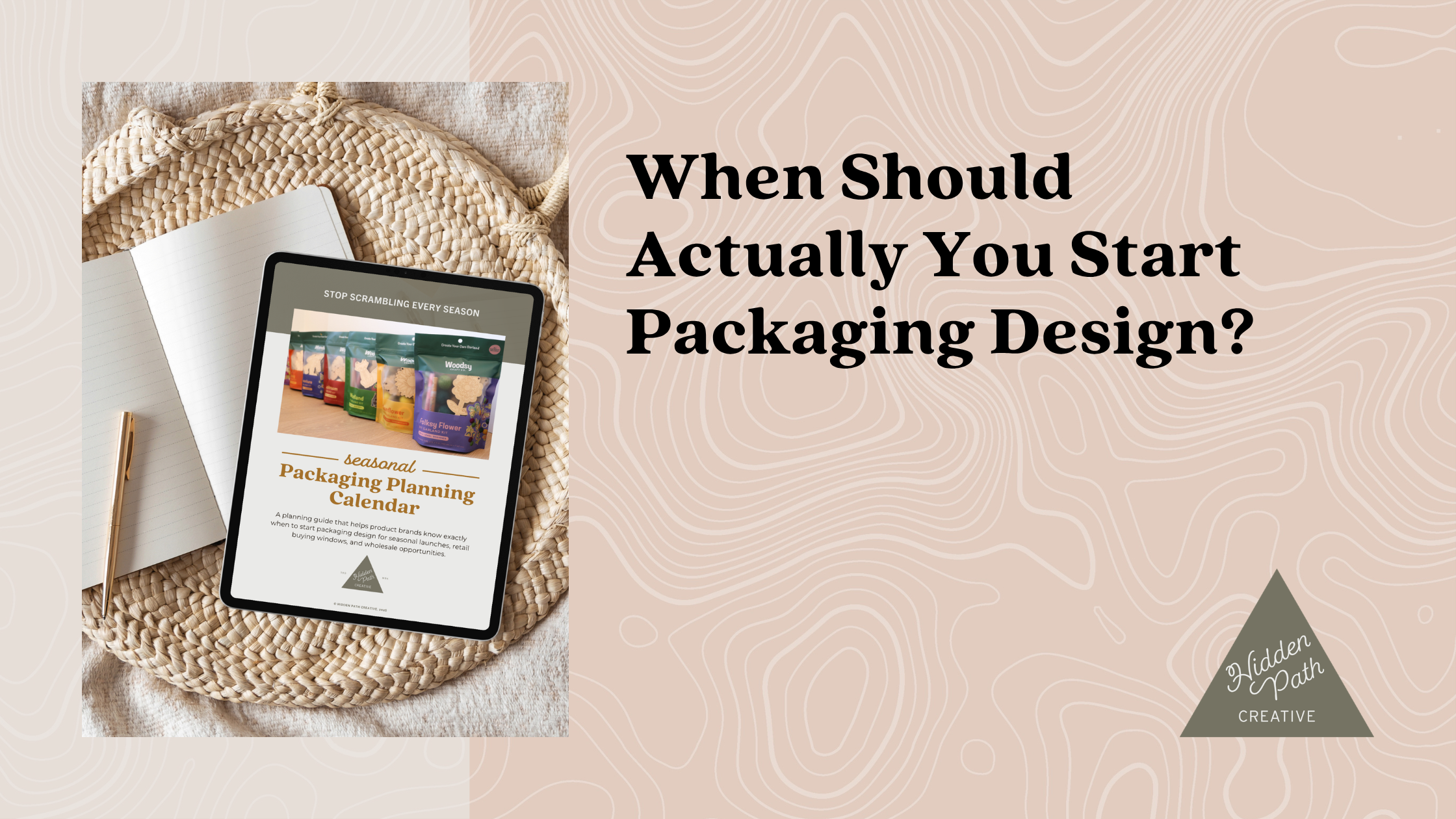
If this post has made you realize your packaging calendar could use more structure, I've created a Packaging Planning Calendar to help. This calendar outlines key seasonal planning windows, helping you stop guessing about when to start and plan your launches with greater confidence.
You can download it using the sign-up box below